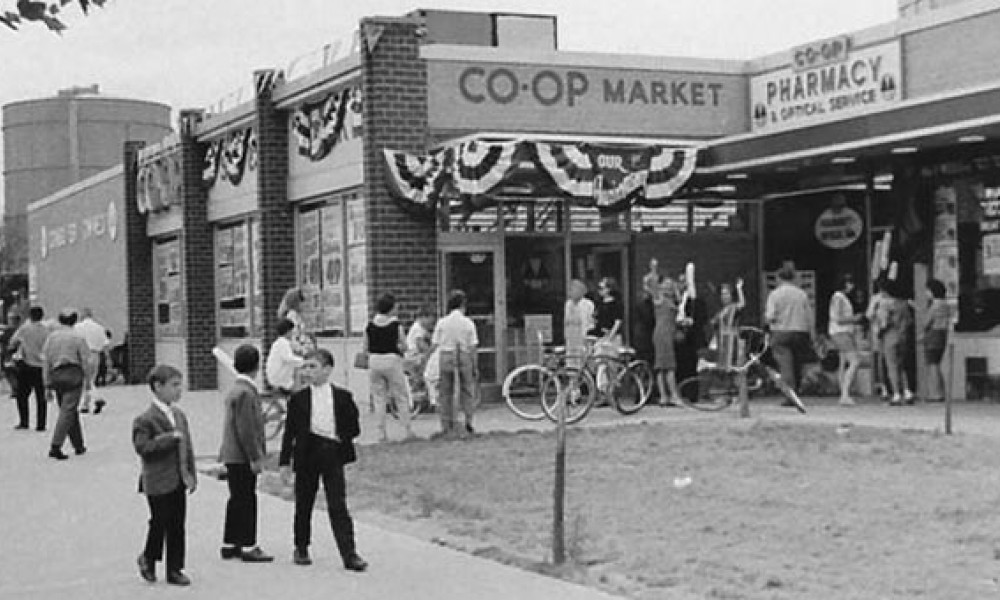
Coop Supermarket
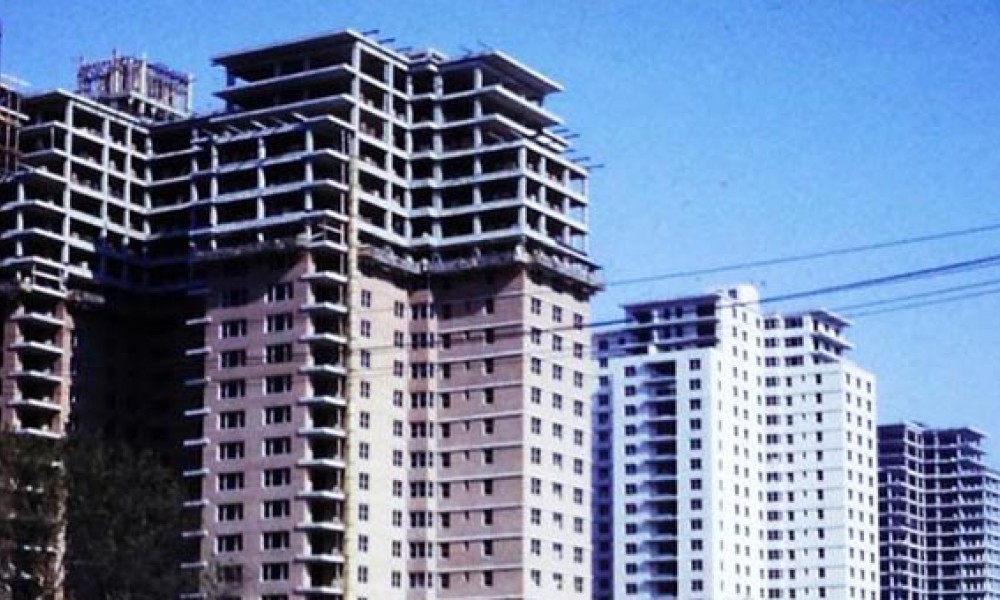
Warbasse Construction

Warbasse

Sidney Hillman Time Magazine

Sidney Hillman
Property History
Built by the United Housing Foundation and the Amalgamated Clothing Workers Union, and named in honor of James Peter Warbasse M.D., our property has a rich history. Read more about how our community took shape.

The story was told that when Sidney Hillman was deep in the dream of the first Amalgamated venture into cooperative housing back in 1926, he put aside all other matters. When you think about the scope of the dream and the enormity of the step the Amalgamated Clothing Union was about to take, his preoccupation was only human.
It wasn't until July 1957, when the United Housing Foundation submitted its plan for the middle-income cooperative, Warbasse Houses. It proposed to build thirteen 20-story buildings for 5,184 families, reclaiming a blighted 62-acre site in Brighton-Coney Island. The City Planning Commission approved the plan for Warbasse Houses in July 1958, including a twenty-year tax abatement which the law permitted. During this period some 3,500 families flocked to the applications office and made down payments toward their apartment equities.
The battle began when a private builder branded the tax concession a "give away," although Stuyvesant Town, built under even more liberal tax abatements, was considered an outstanding success.
It was clear from the start that this private builder wanted the land for his own rental and cooperative apartments, at far higher costs to tenants. To get the site, he offered the city more tax revenue than the United Housing plan could afford at the twenty-one dollar per room, middle-income figure in its proposal.
But he misjudged the fighting spirit of Abraham E. Kazan and that of the Warbasse families whose need was matched only by their determination. The Citizens' Housing and Planning Council and the New York Times were but two of many groups that came out in strong support of the Warbasse project over the private developer's plan. Warbasse cooperators (2,000 of them) signed a petition to Mayor Wagner urging his intervention. They wrote letters, organized committees, testified at board of Estimate hearings, and visited city politicians to plead the cause of genuine middle-income housing.
While the battle was joined, the years were passing. In the darkest hour of the fight, the Amalgamated Clothing Workers stepped in, taking on the co-sponsorship of the cooperative and threatening to demand a full scale investigation of the maneuvering behind the scenes in the Board of Estimate fight.
Finally it appeared that a compromise might be worked out which would permit the United Housing Foundation to build a cooperative for 2,585 families: 24-story buildings on slightly less than half the original site. The United Housing Foundation agreed to a higher tax payment to the city and, regrettably, was forced to raise average carrying charges from twenty-one to twenty-three dollars a room per month to cover this added tax.
During the dog days of August 1959, hopeful Warbasse cooperators mobilized for the last push to win approval of Amalgamated Warbasse Houses. On August 21st more than a thousand people overflowed the hearing chamber at City Hall, crowded into adjoining rooms, and patiently-and not so patiently-spilled over to the steaming sidewalks outside.
At long last, in May 1960, final approval came. Title to the land was taken May 22, 1960, and relocation began at once. The plan was finally underway.
James Peter Warbasse M.D. (1866-1957): The story of the housing cooperative is called Amalgamated Warbasse Houses. Dr. Warbasse, the founder of The Cooperative League of the U.S.A., was a close friend of the Amalgamated Clothing Workers of America. At the Amalgamated's 1920 Convention Dr. Warbasse brought the message of cooperation. He would have been proud to have his name and that of the Amalgamated coupled in association with this cooperative enterprise.
Coop Supermarket
Warbasse Construction
Warbasse
Sidney Hillman Time Magazine
Sidney Hillman
Neighborhood
Grab a hot dog at Nathans and take a stroll around our historic neighborhood to see the revival taking place throughout the area. Spurred by public, private and community initiatives, Coney Island is once again full of vitality. Our diverse population enjoys great facilities, schools, transportation, entertainment and cultural life.
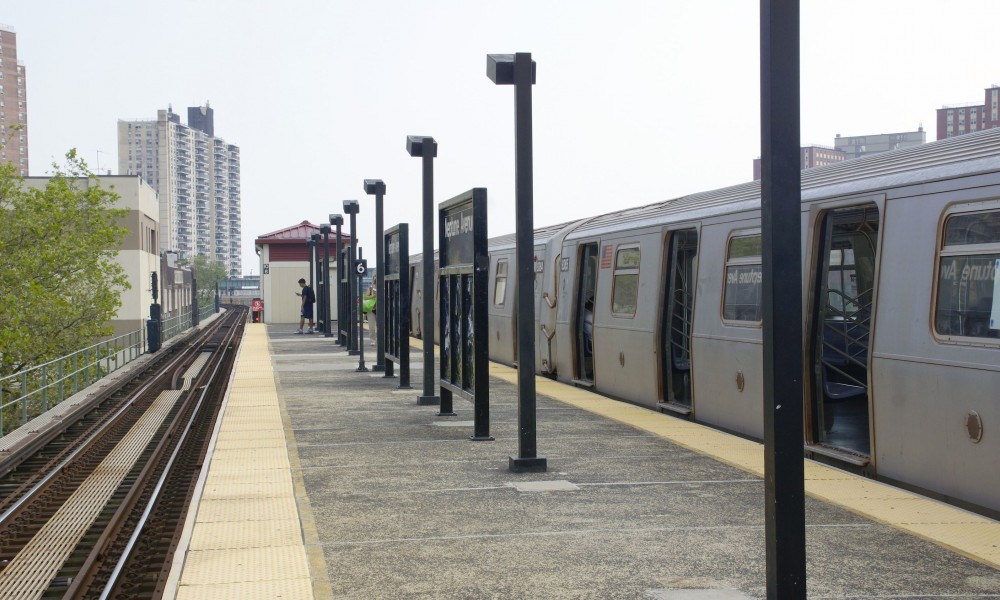
Subway Station
Coney Island is a residential neighborhood, peninsula and beach on the Atlantic Ocean in southwestern Brooklyn, New York City. The residential portion of the peninsula is a community of 60,000 people in its western part, with Sea Gate to its west, Brighton Beach and Manhattan Beach to its east, and Gravesend to the north.
Coney Island is well known as the site of amusement parks and a seaside resort. The attractions reached their peak during the first half of the 20th century. In recent years, the area has seen the opening of Maimonides Park and has become home to the Brooklyn Cyclones minor league baseball team.
Map – Getting There
Get door-to-door transit, driving, walking and biking directions right to our front door. See transit maps, find nearby subway stations and bus stops and estimate travel time right from this website.
Coney Island is the westernmost part of the barrier islands of Long Island and is about 4 miles long and 0.5 miles wide.
Driving Directions
Coming from Battery Tunnel and Verrazano Bridge
Take Belt Parkway East to Exit 7 (Ocean Parkway). Take Service road to light and right onto Ocean Parkway. Take Ocean Parkway to second traffic light (Neptune Avenue) and make right. Take Neptune Avenue to next traffic light (West 5th Street) and make right. Approximately 50 feet make left into parking lot behind bank. Proceed in parking lot and make first left. Park in any space marked "Staff Only" or behind wall marked Keyfood parking. Exit vehicle and proceed to small path that leads to "Sidney Jonas Walkway". Management office is located at ground level of building (look for sign and entrance).
Coming from Long Island and Kennedy Airport
Take Belt Parkway West to Exit 7 (Ocean Parkway). Take service road to light and make left. . Take Ocean Parkway to second traffic light (Neptune Avenue) and make right. Take Neptune Avenue to next traffic light (West 5th Street) and make right. Approximately 50 feet make left into parking lot behind bank. Proceed approximately 50 feet in parking lot and make first left. Park in any space marked Staff Only or behind wall marked Keyfood parking. Exit vehicle and proceed to small path that leads to "Sidney Jonas Walkway". Management office is located at ground level of building (look for sign and entrance).
By Train
Take F train to Neptune Avenue Station stop (make sure it is the Coney Island bound F train). Proceed down stairs and look for Sidney Jonas Walkway. Proceed down walkway (approximately 200 yards) until you get to the second building on your left hand side. Management office is located at ground level of building (look for sign and entrance).
Note: There is also on street parking as well as a municipal parking (small hourly fee) lot located in the Trump Village Shopping Center located on the corner of West 5th Street and Neptune Avenue.